
A short story by Kisanna Szabó
Cherry Trees down Marigold Street
Part 2
Listen to the story
Part TWO
A cat meowed on the window ledge of Mike’s old house. It was sunbathing lazily in the sun, demonstrating its freedom, comfort and leisure. It meowed again a little louder, at which a dog started barking furiously from across the street. It apparently pleased the cat to upset the dog. However, its relaxation seemed a bit overdone: its body was like liquid, almost pouring off of the window ledge. The louder the barking, the more relaxed the cat. He felt sorry for the scruffy old dog rattling its chains in frustration, and walked across the street to give it a little company.
A bare patch of ground in the grass showed the area where the dog could walk. There was excrement all around. No fresh water, no food, only a tarnished, empty metal pot by the doghouse. The chain clinked against it as the dog’s body moved with its angry barking. It was a sad sight. Then suddenly, a revelation struck him. He knew this dog! This was Buttons! She had been the cutest puppy, with soft, fuzzy fur and black, beady eyes full of joy.
‘Buttons,’ he called, but the dog was barking too loud to hear him. People might come out soon to see what she was barking at. The cat had left; it probably knew that the human would take the dog’s attention, and had gone off to find some other creature to annoy. He walked closer to the garden wall, with a strange feeling of pressure in his chest, a bittersweet longing for a past time when this dog had had a better life. He called the dog’s name again in a low, soft voice, but she still wouldn’t stop barking – she just took a few steps backwards and snarled. He gave it another try. He desperately wanted Buttons to calm down and see him, really see him. He calmly walked as close to Buttons as possible, squatted down, smiled and patted the low wall supporting the fence and used a cheerful, high-pitched voice to call the animal’s name. This was the way they used to call her to play when they were kids. ‘Buttons! Buttons!’
The dog paused. She was confused: she froze for a few seconds, then wagged her tail twice, froze again, barked once, came closer, backed off again, then froze again.
He called ’Buttons’ once again in the same way. Buttons cocked her ears, only her wet nose twitched. She knew now. She whined, then she scrambled closer to meet him, wagging her tail, but couldn’t reach the fence, as the chain was too short. It was painful for both dog and man.
‘Who’s looking after you now, hm? Do you get enough to eat?’
Now that his soft voice was getting through to Buttons, it calmed her.
He kept looking around but he saw no one. In conditions like this, dogs tend to eat their own excrement. He wished he hadn’t thought of that. He found a stick and threw it above the fence for the dog to fetch. Buttons leaped but then stopped and didn’t go and get the stick, just put her chest on the ground, front legs stretched out, bottom and tail up in the air. It seemed as if the dog had lost hope right in the middle of a movement. He would never have thought that it would be a dog who would provide him with the perfect exemplification of spleen, of joy dying before it blooms.
‘You used to bring every stick back, every time, Buttons! Tell me it’s just because you’re old.’
He remembered the night when he and Nicki had played the whole night through with Buttons: the night of the engagement party at the vacant lot. The vacant lot engagement party was the only festivity the neighbourhood had had in all the years that he lived there. The sound of the Balkan jazz band from that party echoed in his head. He said goodbye to Buttons. Have to go.
It was not the most cheerful of times in the years when he was a young boy. There was a permanent, lingering tension, some kind of subdued fear of being watched, of having to be careful of every move you make. It was not some kind of wartime alertness, it was a quiet, ubiquitous tension that people just lived with, like they would live with a hump on their back. Everything – institutions, homes, even routines and interactions were permeated with this threat; an outsider could have seen it in the way people moved.
To him as a child, oppression was not a direct experience. It was manifest only in a certain kind of atmosphere, in the expression on people’s faces – and the colours. Yes, the colours: the faded yellow, the rusty brown, the dead red and the uniform blue.
Just as he was getting bigger, though, things started to change. He didn’t know what it was exactly, but he knew that something was shifting: the empty shelves of shops filled up with goods that people had only dreamed of before – creamy chocolates in golden wrapping, exotic fruits they hadn’t even seen in pictures. Official songs that had been sung at school celebrations were officially replaced with different ones. People were hopeful, there was a new beginning, a new shine in people’s eyes; it was spring everywhere and it lasted for years.
It was in these exhilarating times that an engagement party could be held on the vacant lot. The bride was a jazz singer, the groom a painter, living at the end of the street. They didn’t have much money (nobody did, really), but even with no savings to fall back on, they wanted to celebrate in style, so the vacant lot was transformed for a day. Everybody in the street was invited. Everybody baked, cooked and decorated. Makeshift gazebos and stages, tons of flowers, white bed sheets turned into huge floral curtains transformed the place and – well, it was beautiful.
It was like taking the lid off of a crazily boiling soup – the people of Marigold Street put on their best clothes and had unrestrained fun. Everyone was euphoric: chatting, dancing and singing away. Children and animals tapped into this feeling in the air and they made full use of it. It must have been the best day in Buttons’ life. It was a certainty that the dog had not received half the amount of attention in the past years that he did that one night.
He was twelve at the time. As an adolescent, he found it only natural that everything around him was buzzing, growing, opening up. His awakening coincided with that of his country. His hormones started going wild at the same time as reforms were happening and politics was changing. It was a perfect fit. There is this strange sensation we get after putting down a heavy load we’ve been carrying for a while: the body feels as if it is rising off the ground. That’s what he’d felt like back then, constantly. When did this feeling go? How had he lost it?
Part Two - for learning
A cat meowed on the window ledge of Mike’s old house. It was sunbathing lazily in the sun, demonstrating its freedom, comfort and leisure. It meowed again a little louder, at which a dog started barking furiously from across the street. It apparently pleased the cat to upset the dog. However, its relaxation seemed a bit overdone: its body was like liquid, almost pouring off of the window ledge. The louder the barking, the more relaxed the cat. He felt sorry for the scruffy old dog rattling its chains in frustration, and walked across the street to give it a little company.
A bare patch of ground in the grass showed the area where the dog could walk. There was excrement all around. No fresh water, no food, only a tarnished, empty metal pot by the doghouse. The chain clinked against it as the dog’s body moved with its angry barking. It was a sad sight. Then suddenly, a revelation struck him. He knew this dog! This was Buttons! She had been the cutest puppy, with soft, fuzzy fur and black, beady eyes full of joy.
‘Buttons,’ he called, but the dog was barking too loud to hear him. People might come out soon to see what she was barking at. The cat had left; it probably knew that the human would take the dog’s attention, and had gone off to find some other creature to annoy. He walked closer to the garden wall, with a strange feeling of pressure in his chest, a bittersweet longing for a past time when this dog had had a better life. He called the dog’s name again in a low, soft voice, but she still wouldn’t stop barking – she just took a few steps backwards and snarled. He gave it another try. He desperately wanted Buttons to calm down and see him, really see him. He calmly walked as close to Buttons as possible, squatted down, smiled and patted the low wall supporting the fence and used a cheerful, high-pitched voice to call the animal’s name. This was the way they used to call her to play when they were kids. ‘Buttons! Buttons!’
The dog paused. She was confused: she froze for a few seconds, then wagged her tail twice, froze again, barked once, came closer, backed off again, then froze again.
He called ’Buttons’ once again in the same way. Buttons cocked her ears, only her wet nose twitched. She knew now. She whined, then she scrambled closer to meet him, wagging her tail, but couldn’t reach the fence, as the chain was too short. It was painful for both dog and man.
‘Who’s looking after you now, hm? Do you get enough to eat?’
Now that his soft voice was getting through to Buttons, it calmed her.
He kept looking around but he saw no one. In conditions like this, dogs tend to eat their own excrement. He wished he hadn’t thought of that. He found a stick and threw it above the fence for the dog to fetch. Buttons leaped but then stopped and didn’t go and get the stick, just put her chest on the ground, front legs stretched out, bottom and tail up in the air. It seemed as if the dog had lost hope right in the middle of a movement. He would never have thought that it would be a dog who would provide him with the perfect exemplification of spleen, of joy dying before it blooms.
‘You used to bring every stick back, every time, Buttons! Tell me it’s just because you’re old.’
He remembered the night when he and Nicki had played the whole night through with Buttons: the night of the engagement party at the vacant lot. The vacant lot engagement party was the only festivity the neighbourhood had had in all the years that he lived there. The sound of the Balkan jazz band from that party echoed in his head. He said goodbye to Buttons. Have to go.
It was not the most cheerful of times in the years when he was a young boy. There was a permanent, lingering tension, some kind of subdued fear of being watched, of having to be careful of every move you make. It was not some kind of wartime alertness, it was a quiet, ubiquitous tension that people just lived with, like they would live with a hump on their back. Everything – institutions, homes, even routines and interactions were permeated with this threat; an outsider could have seen it in the way people moved.
To him as a child, oppression was not a direct experience. It was manifest only in a certain kind of atmosphere, in the expression on people’s faces – and the colours. Yes, the colours: the faded yellow, the rusty brown, the dead red and the uniform blue.
Just as he was getting bigger, though, things started to change. He didn’t know what it was exactly, but he knew that something was shifting: the empty shelves of shops filled up with goods that people had only dreamed of before – creamy chocolates in golden wrapping, exotic fruits they hadn’t even seen in pictures. Official songs that had been sung at school celebrations were officially replaced with different ones. People were hopeful, there was a new beginning, a new shine in people’s eyes; it was spring everywhere and it lasted for years.
It was in these exhilarating times that an engagement party could be held on the vacant lot. The bride was a jazz singer, the groom a painter, living at the end of the street. They didn’t have much money (nobody did, really), but even with no savings to fall back on, they wanted to celebrate in style, so the vacant lot was transformed for a day. Everybody in the street was invited. Everybody baked, cooked and decorated. Makeshift gazebos and stages, tons of flowers, white bed sheets turned into huge floral curtains transformed the place and – well, it was beautiful.
It was like taking the lid off of a crazily boiling soup – the people of Marigold Street put on their best clothes and had unrestrained fun. Everyone was euphoric: chatting, dancing and singing away. Children and animals tapped into this feeling in the air and they made full use of it. It must have been the best day in Buttons’ life. It was a certainty that the dog had not received half the amount of attention in the past years that he did that one night.
He was twelve at the time. As an adolescent, he found it only natural that everything around him was buzzing, growing, opening up. His awakening coincided with that of his country. His hormones started going wild at the same time as reforms were happening and politics was changing. It was a perfect fit. There is this strange sensation we get after putting down a heavy load we’ve been carrying for a while: the body feels as if it is rising off the ground. That’s what he’d felt like back then, constantly. When did this feeling go? How had he lost it?
Cherry Trees Part 2 - comprehension
A little bit further down on Marigold Street…
Vocabulary
In the vocabulary list you will NOT find ALL meanings of the words, you will only see what they mean in the story. The letters in the brackets:
n = noun (eg.: table)
v = verb (eg.: sit)
adj = adjective (eg.: happy)
adv = adverb (eg.: slowly)
exp = expression (eg.: by the way)
It is very important: please learn the words in context if possible, so rely on the sentences in the short story.
Some words in pictures
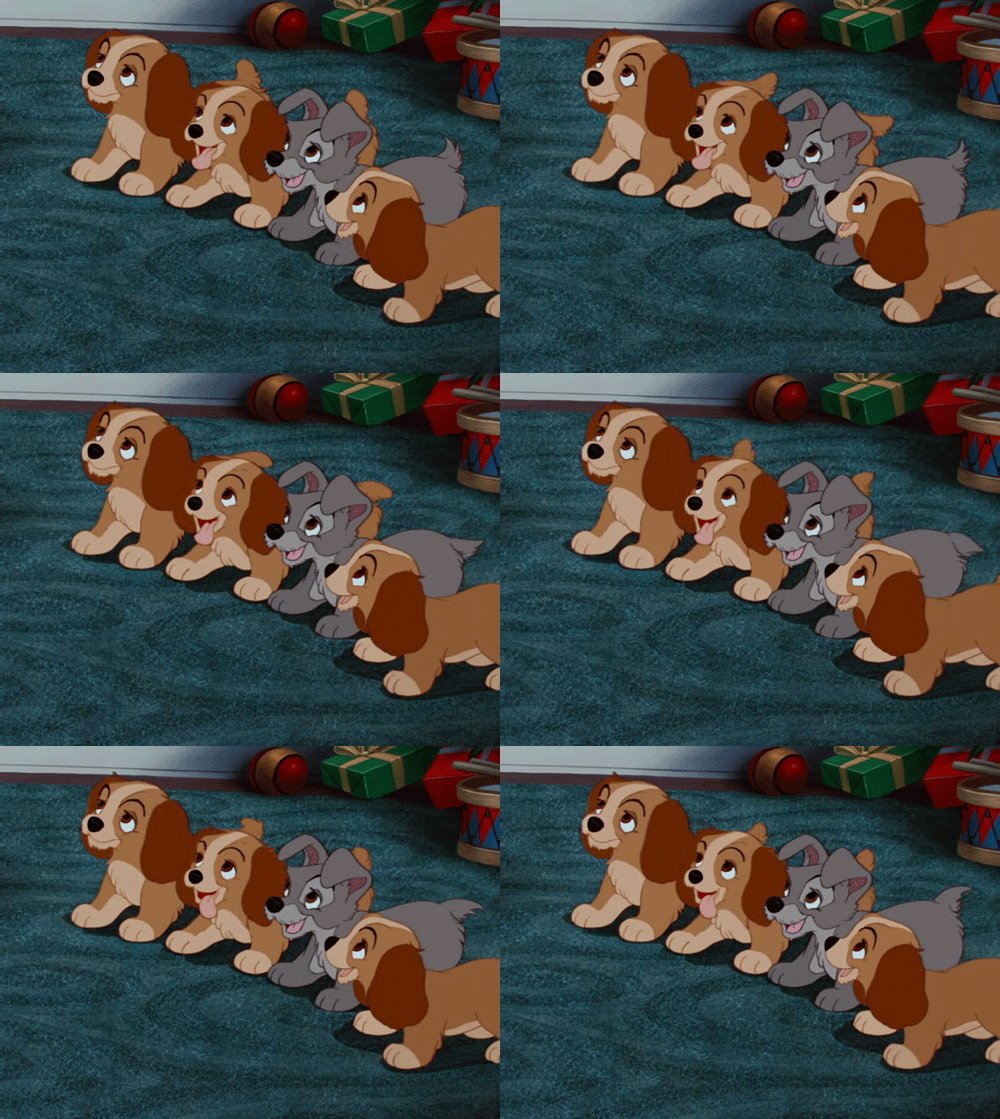
the puppies are wagging their tails

excrement
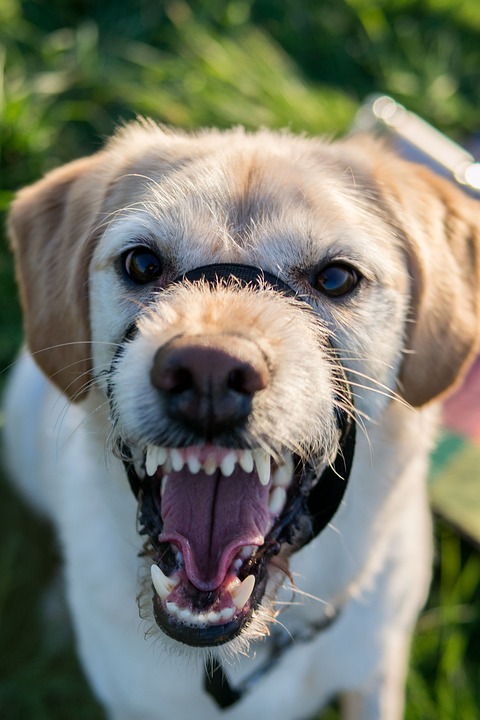
snarl
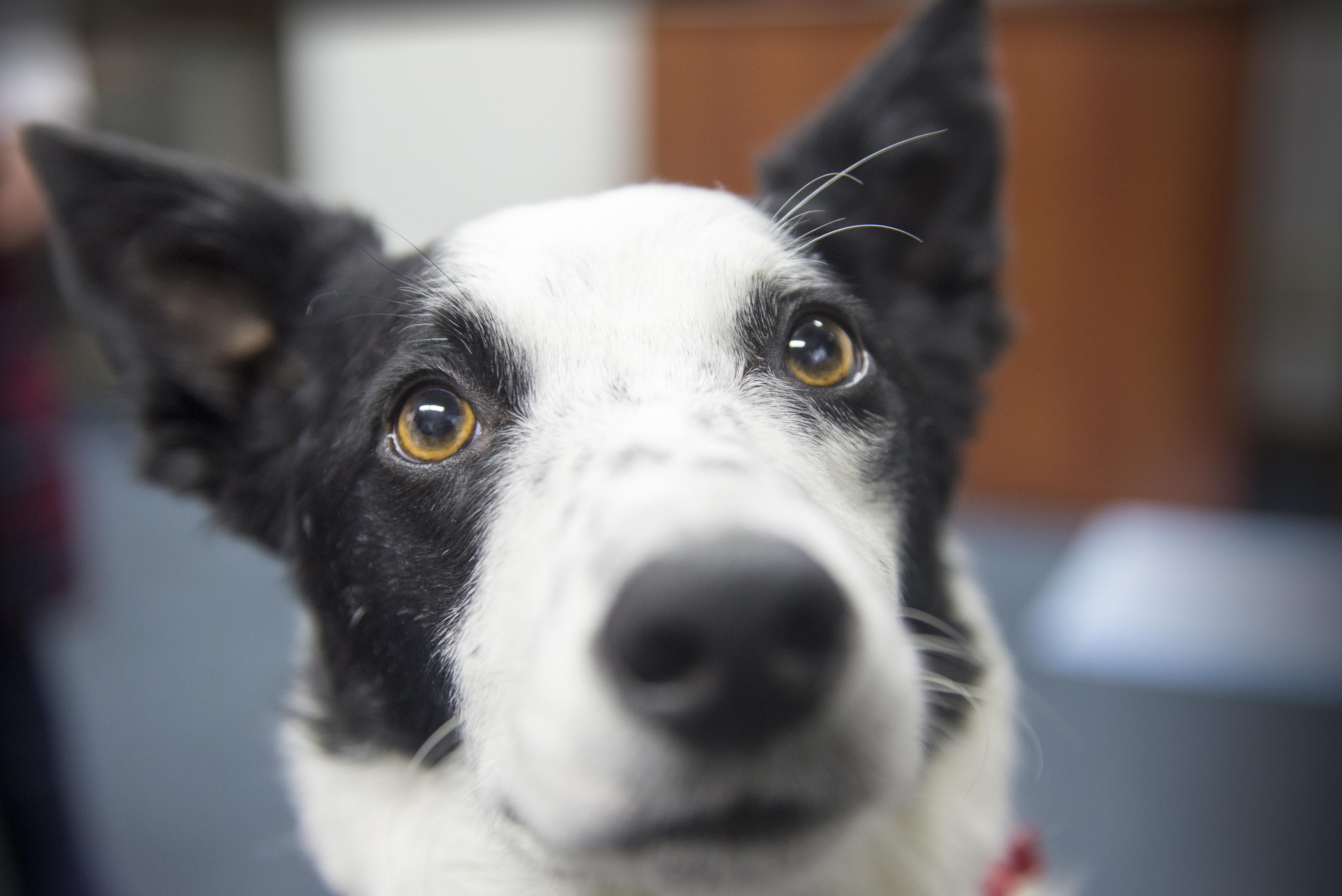
cocked ears
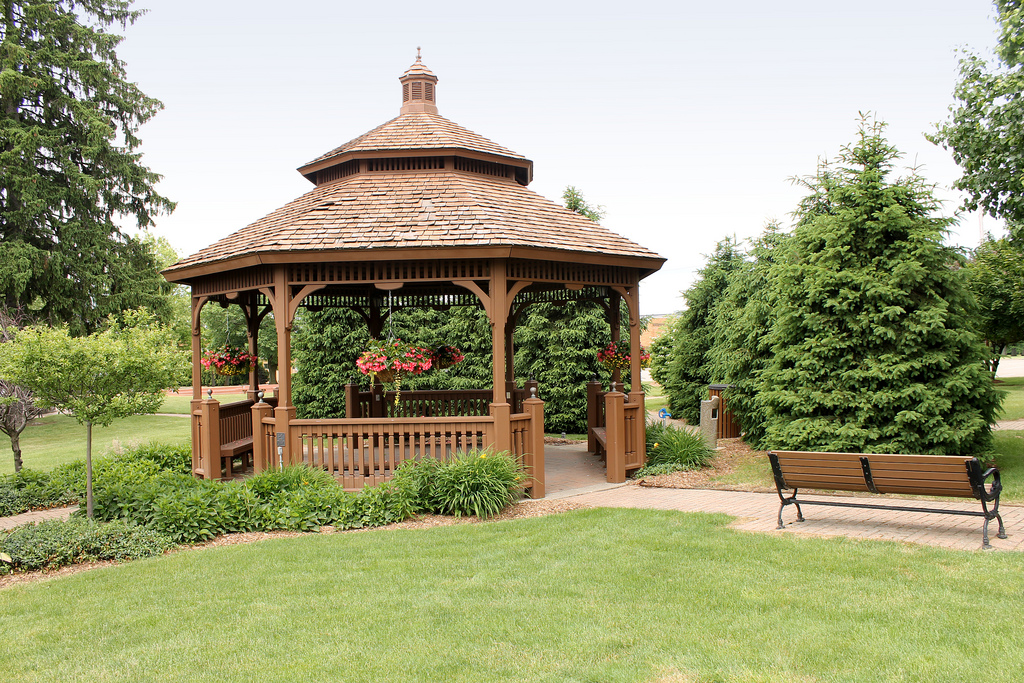
gazebo
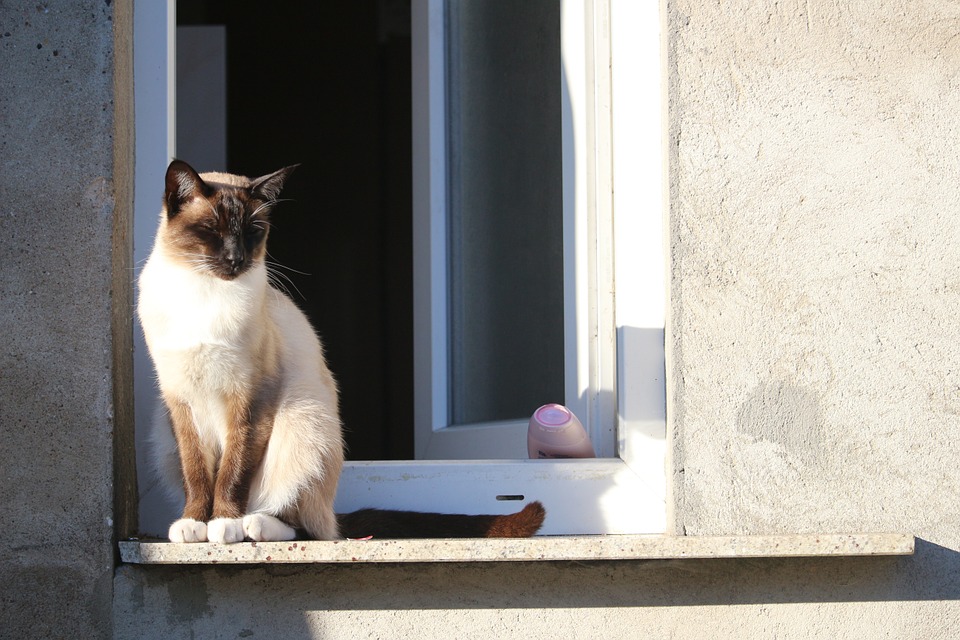
window ledge (with cat)
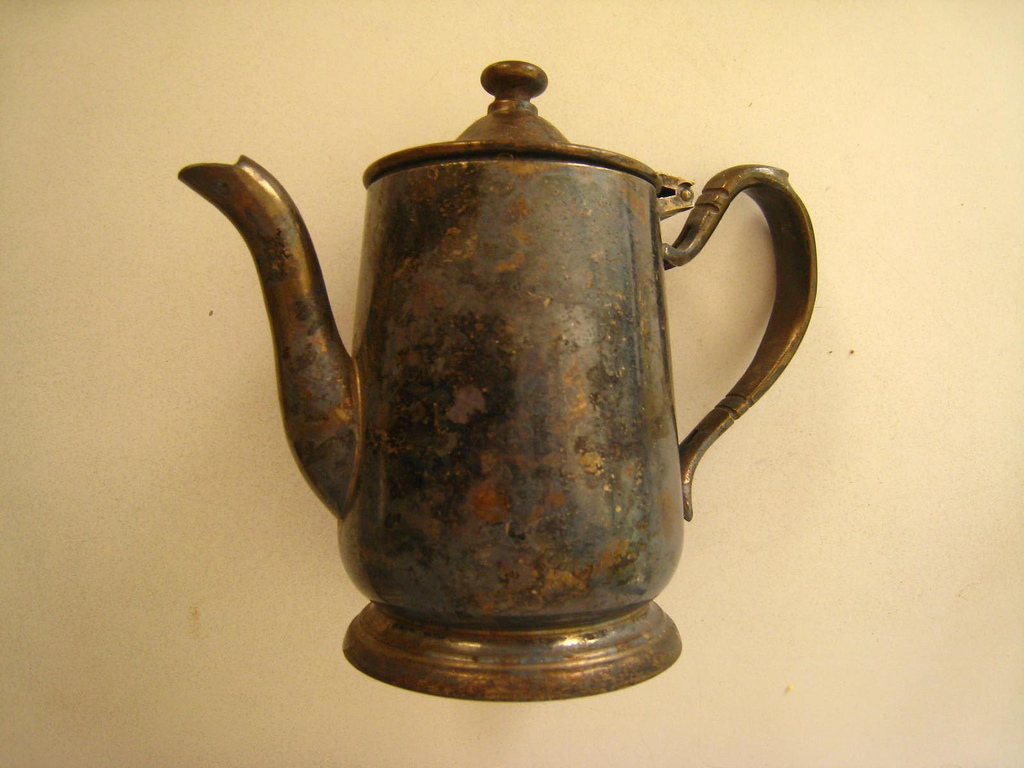
tarnished metal
window ledge (n) – windowsill, the horizontal plank at the bottom of a window
scruffy (adj) – shabby and untidy or dirty
rattle (v) – make short, sharp knocking sounds in rapid succession. There are two typical things that rattle: a rattlesnake, and the classical baby toy: the rattle
patch (n) – a part of something marked out from the rest by a particular characteristic
excrement (n) – faeces, a medical term for what comes out of our bottoms at the end of the digestive tunnel
tarnished (adj) – to dull or destroy the shiny surface (of metal) esp. by air, dust, or dirt
clink (v) – cause or make a ‘clink’ (see below)
clink (n) – the sharp, ringing sound you get when you strike metal or glass objects
beady eyes (exp.) – small, glittering, dark eyes. Keen watchfulness that may be somewhat hostile
snarl (v) – (of an animal such as a dog) make an aggressive growl with bared teeth
high-pitched (adj) – (of a sound) high
wag (v) – (especially with reference to an animal’s tail) move rapidly to and fro
cock (one’s) ear (exp) – (especially of dogs) – to turn up or to one side, often in a cheerful or attentive manner
whine (v) – make a long, high-pitched complaining cry or sound
scramble (v) – move hurriedly and/or clumsily from or into a particular place or position
spleen (n) – spleen is a word often associated with 19th c romanticism, in this context meaning a certain gloomy mood, melancholy. This is the meaning used in the story. However, it also means bad temper, spite, anger in the character
lingering (adj) – lasting/being present for a long time, not wanting to/taking a long time to leave or pass
subdued (adj) – quiet and restrained, not out in the open
ubiquitous (adj) – present, appearing, or found everywhere, omnipresent, ever-present
hump (n) – a rounded protuberance found on the back of a camel or other animal or as an abnormality on the back of a person
permeated (adj) – spread throughout something
fall back on (phr. v) – use a source of help in a difficult situation (e.g.: fall back on savings, fall back on an argument for proof)
gazebo (n) – a small building with a roof but no (or partial) walls, especially one in the garden of a house, a structure that gives a wide view of the surrounding area but also gives protection from sun and rain
to sing /dance away (exp) – sing or dance very joyfully for a long time, forgetting everything else
coincide (with) (v) – occur at the same time (the noun coincidence derives from this verb)
load (n) – a heavy or bulky thing that is being carried or is about to be carried
Now start the vocab quiz
Grammar
Countability
Many people find the topic of countability a nightmare. On one hand, you must learn which words are countable and which ones aren’t, but this is not the end of the story. There are some words that can be both countable and uncountable depending on the meaning or the semantic context. Furthermore, there are some nouns that look plural but are singular, and there are nouns that look countable but they have only singular or plural forms but not the other. Aarghhh…
Now let’s wake up from the nightmare of not understanding countability. All explained, it becomes clear and you’ll realise that reality is much better than the nightmare.
Let’s look at the basics first:
Countable nouns are most often things that can have separate units. That’s why tangible objects that you can hold in your hand are usually countable:
a chain – chains
Uncountable nouns, on the other hand, usually represent concepts, substances or liquids.
freedom leisure metal water
Nouns that are both countable and uncountable
Some nouns can be both countable [C] and uncountable [U]. Their meaning is usually a little different in the two different forms.
The countable form refers to something specific.
The uncountable form refers to something more general – a substance or a general idea.
Cricket is a sport. [C]
Do you enjoy doing or watching sport*? [U]
*Note: For sport as a general concept some speakers use ‘sports’. In this case it works like ‘news’ (see below). ‘Sports’ is more commonly used in the USA, where you can hear things like this: ‘When I look around here, I say ‘this is sports.’
When a noun refers to a material and an object at the same time:
I need a glass to serve this juice. [C]
I prefer to drink fruit juice from glass, tea from porcelain. [U]
There’s a statue of my Grandpa in the living room, made of glass. [U]
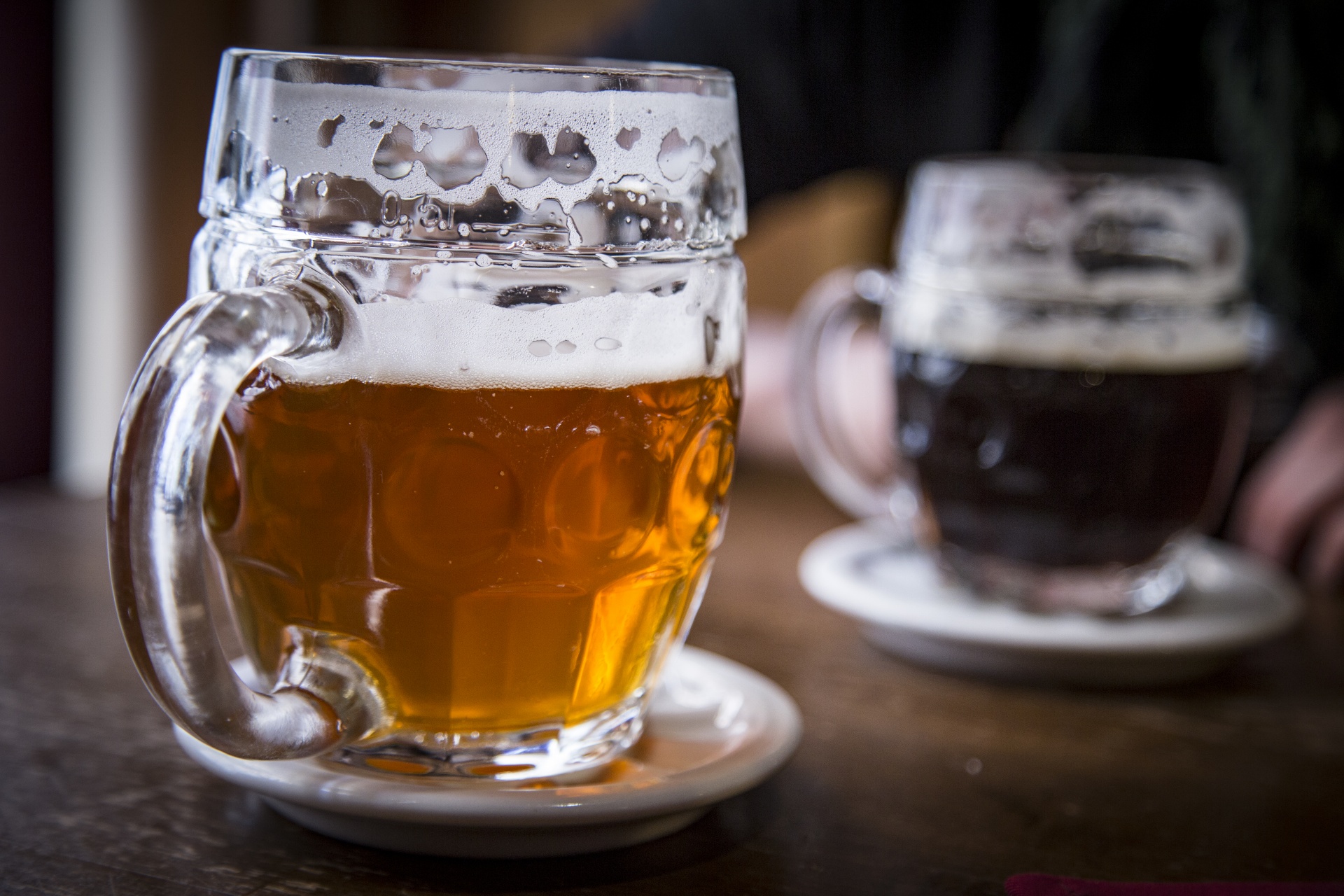
Beer, (coffee, tea) can be countable when we talk about them meaning portions, in containers:
Do you feel like having a beer? [C]
I love the colour and transparency of beer, but I hate the taste of it. [U]
Other typical cases of general/specific:
To him as a child, oppression was not a direct experience. [C]
Did you have experience when you applied for that position? [U]
I run a small coaching business. [C]
People say there’s no friendship in business. [U]
Reading is one of my favourite relaxations. [C]
I’ll read a little for relaxation. [U]
Evidently countable nouns referring to living things can be used as uncountables when we refer to their general meaning.
It was painful for both dog and man.
These were conditions unbearable to man. (conditions were unlivable, inhumane)
Such occurrences can be embarrassing for both doctor and patient. (any doctor, any patient)
If you feel the difference between specific and general, you will be 99% correct using this type of nouns. You will find that almost all uncountable words can become countable if you assign something specific to them.
Nouns that are uncountable but look plural

The final ‘s‘ of a noun can be misleading as it is not always the sign of a plural ending. However, in the case of certain words, ‘s‘ is a part of the word, and without it, the word wouldn’t be complete: news, darts, statistics, gymnastics, physics, measles, mumps, politics, etc. So, don’t forget, these words are uncountable and take a singular verb.
An example from our short story:
His hormones started going wild at the same time as reformation was happening and politics was changing.
Some more examples:
I know this news is hard to accept.
Do you happen to know when darts was invented?
Uncountable nouns used in the plural form
The mere statement that uncountable nouns can be used in the plural form sounds weird. You should think of the countable forms of these nouns as a derivation from their uncountable forms.
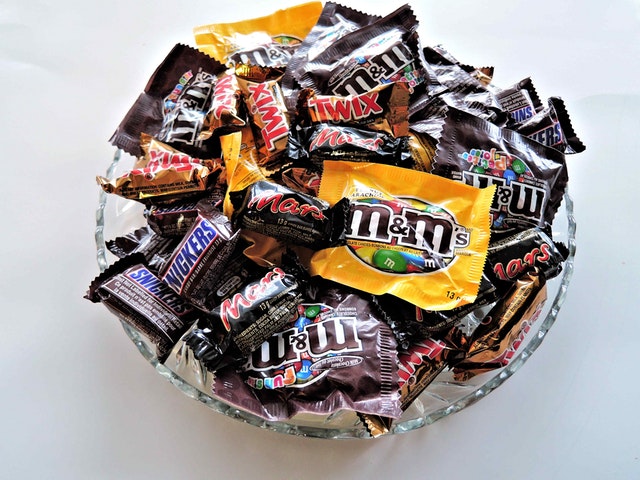
Uncountable nouns, when they refer to something material, usually refer to a mass or substance. For example: chocolate – it’s a mass of cocoa and sugar that we consume with joy. In contrast, if we want to express that there are different types of chocolate, we can pluralise the noun, meaning the types.
This mostly happens with food-words when we talk about different types of it. However, all uncountable nouns can behave like this if the concept of “different types” is applicable.
CHOCOLATE, FRUIT
…the empty shelves of shops filled up with goods that people had only dreamed of before – creamy chocolates in golden wrapping, exotic fruits they hadn’t even seen in pictures.
WINE
How many different white wines does your company produce?
Uncountable nouns used in a singular form with an indefinite article

This is a rather peculiar case. It is usually abstract nouns that are sometimes used in a singular form with an indefinite article, even though they are uncountable. When we specify by using an adjective before these abstract nouns, they transform into a singular noun.
There was a permanent, lingering tension, some kind of subdued fear of being watched, of having to be careful of every move you make.
He felt sorry for the scruffy old dog rattling its chains in frustration, and walked across the street to give it a little company.
He walked closer to the garden wall, with a strange feeling of pressure in his chest, a bittersweet longing for a past time when this dog had had a better life.
People were hopeful, there was a new beginning, a new shine in people’s eyes;
(vs. She has beautiful hair with volume and shine.)
Be careful, if you insert an adjective that does not modify the “generalness” of the noun, the noun will remain uncountable.
Those regulations will heighten racial tension.
Countable nouns with only a singular form

There are some nouns that behave like countable nouns but occur only in the singular form. They are called ‘singular nouns’. For example, we can say:
It was a perfect fit.
but we would never say They were perfect fits.
So “fit” is a singular noun.
These nouns have a special meaning when they are in the singular form. So they are not singular because an adjective has made them specific (as in the case of the nouns in the previous section), but they are singular anyway in that meaning.
There is this strange sensation we get after putting down a heavy load we’ve been carrying for a while. (in this sense you couldn’t use “loads”)
Countable nouns with only a plural form

You must have met everyday words that we use mostly in plural.
1. OBJECTS WITH PAIR-PARTS
Typically, objects that have a pair of identical parts are used in the plural: jeans, shorts, shoes, sun-glasses, eyes, binoculars, scissors, etc. These words don’t really occur in singular forms as we think of them as one unit. It would be really strange to hear that “Jack is wearing a black leather shoe“. Why? What about the other shoe? Is it brown? If this person has shoes on both of his feet, we refer to them as one unit and use plural: Jack is wearing black leather shoes.
2. SPECIAL MEANING IN THE PLURAL
Another typical usage of plural is nouns with a special meaning when in plural: belongings, clothes, facilities, thanks, goods, etc. The concept here is that they are all made up of many separate items (eg: belongings can be your keys, a pen, some small change, etc.)
Let’s see some examples from the short story:
The people of Marigold Street put on their best clothes and had unrestrained fun.
The empty shelves of shops filled up with goods that people had only dreamed of before.
Note: this word (meaning product) is only used in the plural form with a plural verb.
Now check your grammar knowledge.
Watch, listen and repeat
Do you have any questions about the lesson? Feel free to ask. We are here to answer.
Do you have any questions about this lesson? Feel free to ask us here, we will reply. (And don't worry about making mistakes)
0 Comments